

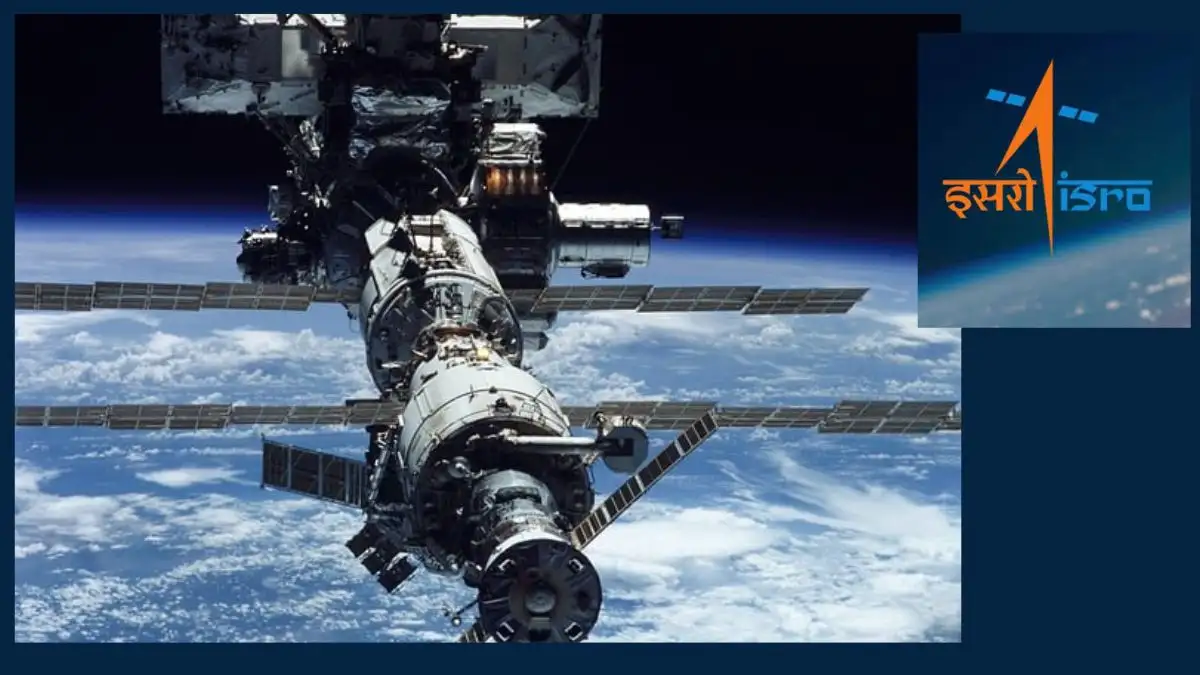
The Indian Space Research Organization (ISRO) has achieved a significant milestone by successfully completing the fourth satellite docking attempt under its Spadex (4th Satellite Docking Experiment) mission. This landmark achievement establishes India as only the fourth country globally, after the U.S., Russia, and China, to demonstrate in-space docking technology. This success marks a critical step in India’s ambitious space program, enabling advancements in future missions such as Chandrayaan-4 and the construction of a Bharatiya Antarik Station (India’s own space station).
Table of Contents
Why Is Space Docking Crucial?
In-space docking involves bringing two spacecraft in the same orbit to connect without collision. This requires extreme precision, including reducing relative velocities and ensuring alignment for successful coupling. Docking technology is indispensable for:
- Chandrayaan-4 Lunar Sample Return Mission: Collecting samples from the lunar surface and returning them to Earth.
- Space Station Assembly: Assembling large modules in low Earth orbit to build India’s space station.
- Human Space Exploration: Supporting missions where astronauts might require docking capabilities for extended stays on the Moon or other celestial bodies.

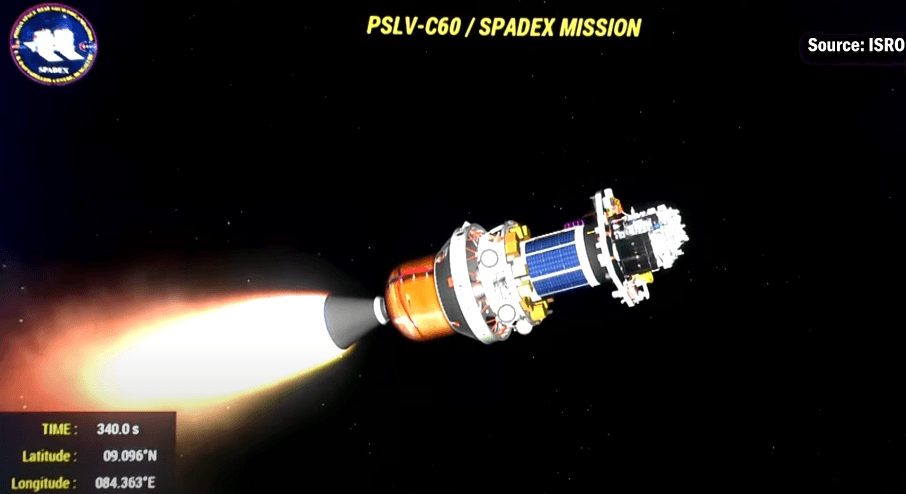
Key Details of the 4th Satellite Docking
- Preparation and Challenges:
ISRO initially planned the docking twice in the last week of December 2024. However, due to unexpected drifts, the attempt was postponed to ensure all factors were under control. - Execution:
The docking process began with precise maneuvers to bring the spacecraft from a 15-meter distance to a 3-meter hold point. This phase required careful adjustments to speed and trajectory to avoid collision. - Unique Challenges with Smaller Modules:
The modules involved in this docking were lightweight, around 200 kg, which made precise control more challenging than heavier modules. Successfully mastering docking with smaller spacecraft positions ISRO to handle larger missions with ease. - Global Recognition:
With this accomplishment, India joins the ranks of space superpowers capable of executing in-space docking, a critical component for advanced space exploration.
Implications for Future Space Missions
1. Chandrayaan-4
India’s upcoming lunar mission aims to bring samples from the Moon’s surface back to Earth. The spacecraft will use docking technology to transfer lunar samples to a return module in space.
2. Bharatiya Antarik Station
Unlike space stations launched in a single mission, India plans to assemble its space station in segments in low Earth orbit. The ability to dock modules will make this possible.
3. Manned Missions
Docking is essential for future manned missions, where astronauts may need to rendezvous with space stations or return modules.
Table: Countries with In-Space Docking Capabilities
| Country | Year of First Docking | Notable Missions |
|---|---|---|
| USA | 1966 | Apollo, ISS Assembly |
| Russia | 1967 | Mir, ISS Assembly |
| China | 2011 | Tiangong Station |
| India | 2024 | Spadex Mission |


FAQs
1. What is in-space docking, and why is it important?
In-space docking is the process of connecting two spacecraft while in orbit. It is vital for assembling space stations, enabling sample-return missions, and facilitating manned missions.
2. How does this achievement position India globally?
India is now the fourth country to master this complex technology, placing it among space exploration leaders and enhancing its capability to undertake advanced missions.
3. What challenges did ISRO face during the docking process?
The small size of the spacecraft modules (200 kg) posed challenges in controlling speed and trajectory with precision. ISRO overcame these difficulties to achieve successful docking.
4. What are the future applications of docking technology for ISRO?
The technology will be critical for Chandrayaan-4, building a space station, and supporting future manned lunar and planetary exploration missions.
5. What makes docking smaller spacecraft harder than larger ones?
Smaller spacecraft are more susceptible to variations in speed and trajectory, making precision control more challenging than with heavier modules.
Conclusion
ISRO’s successful 4th satellite docking attempt under the Spadex mission is a testament to India’s growing prowess in space technology. This achievement not only prepares India for ambitious missions like Chandrayaan-4 but also paves the way for building its own space station and advancing manned space exploration. As India continues to push boundaries in space, the world watches in admiration of its ingenuity and perseverance.


Stay updated with Capsule Post for the latest news and insights of Trump Over Greenland Ambitions, Nifty Crashes, HMP virus, Ketan Parekh 65Cr front-running stock market scam, and the recent development in Canada Justin Trudeau resigns
- হামেশাই প্রেশার মাপেন? কিন্তু ‘ঠিক নিয়মে’ মাপছেন তো?
- Future of Jobs: Shocking 39% of Job Skills Will Become Obsolete by 2030 – Are You Ready?
- ISRO Successfully Executes 4th Satellite Docking Attempt Under Spadex Mission
- Saif Ali Khan Attack News: Shocking Details Emerge About the Attacker Staying Overnight
- How 61 lakh crores wiped out? The Alarming Decline of the Indian Share Market: A Comprehensive Analysis