
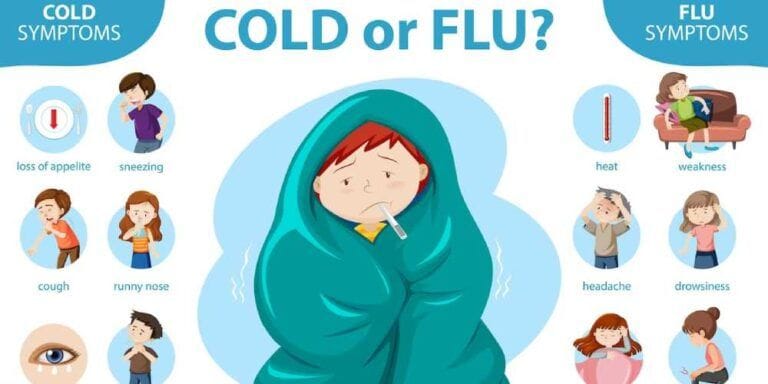
As the cold season takes its toll, many people experience symptoms like sneezing, coughing, and body aches. While these signs are often dismissed as a common cold, they might also indicate the flu. Misunderstanding these conditions can lead to delayed treatment and potential complications. This educational guide aims to explain the differences between the common cold and flu, their symptoms, causes, treatments, and prevention methods using the exact details provided. Let’s dive in!
Table of Contents
What is the Common Cold?
The common cold is a mild viral infection that impacts the upper respiratory tract. It is caused by over 200 types of viruses, with rhinoviruses being the most prevalent. It typically manifests as discomfort but resolves on its own with time and care.
Symptoms of the Common Cold:
- Runny or blocked nose
- Sore throat
- Mild fever
- Body aches
- Fatigue
Treatment for the Common Cold:
- Home remedies such as rest and drinking warm fluids
- Over-the-counter medications like paracetamol and antihistamines
- Symptoms usually subside within 3–4 days


What is the Flu (Influenza)?
The flu, also known as influenza, is a more severe viral infection caused by influenza viruses, such as Influenza A and B. These viruses have multiple subtypes, including H1N1 and H3N2, which can sometimes lead to serious health complications.
Symptoms of Flu:
- High fever
- Severe body aches
- Intense fatigue
- Cough
- Sore throat
Treatment for Flu:
- Consultation with a healthcare provider is critical
- Antiviral medications may be prescribed
- Severe cases may require hospitalization
Key Differences Between Common Cold and Flu
The symptoms of the common cold and flu often overlap, but their causes and severity vary. Here is a clear comparison:
| Aspect | Common Cold | Flu |
|---|---|---|
| Causes | Rhinovirus and other mild viruses | Influenza viruses (H1N1, H3N2) |
| Symptoms | Mild fever, sore throat, fatigue | High fever, severe aches, fatigue |
| Treatment | Home remedies and OTC medications | Medical consultation needed |
| Severity | Generally mild | Can be severe, sometimes life-threatening |
Why Timely Diagnosis Matters
Confusing the flu with a common cold can delay appropriate treatment. While the common cold often resolves naturally, the flu might require medical intervention. Ignoring flu symptoms can lead to complications, including pneumonia and hospitalization in severe cases.
Prevention Tips for Both Cold and Flu
Prevention is always better than cure. Here are some effective ways to reduce the risk of catching or spreading these illnesses:
- Practice Good Hygiene: Regularly wash your hands with soap and water for at least 20 seconds.
- Avoid Crowded Places: Stay away from heavily populated or poorly ventilated areas, especially during flu season.
- Boost Immunity: Maintain a balanced diet, drink plenty of water, and ensure adequate sleep.
- Get Vaccinated: Annual flu vaccinations are highly effective in preventing influenza.
- Avoid Face Touching: Refrain from touching your eyes, nose, and mouth to minimize the risk of infection.


Frequently Asked Questions (FAQs)
1. Can the flu be treated with home remedies?
Home remedies can help alleviate flu symptoms, but medical consultation is essential for proper antiviral treatment to avoid complications.
2. How long does the common cold last?
The common cold typically lasts 3–4 days and can be managed with rest, fluids, and over-the-counter medications.
3. Is the flu contagious?
Yes, the flu is highly contagious and spreads through respiratory droplets from coughs or sneezes.
4. Are flu vaccines effective?
Flu vaccines are highly effective in preventing influenza and reducing the severity of symptoms if you do get infected.
5. When should I see a doctor?
Seek medical advice if you experience high fever, difficulty breathing, chest pain, or prolonged symptoms that don’t improve.


Final Thoughts
Understanding the differences between the common cold and flu is crucial for timely diagnosis and treatment. By recognizing the symptoms and taking preventive measures, you can protect yourself and others from these common seasonal illnesses. Stay informed, stay healthy, and don’t hesitate to seek medical advice when needed!
Stay informed and stay healthy! 😊
Stay updated with Capsule Post for the latest news and insights of Trump Over Greenland Ambitions, Nifty Crashes, HMP virus, Ketan Parekh 65Cr front-running stock market scam, and the recent development in Canada Justin Trudeau resigns


- হামেশাই প্রেশার মাপেন? কিন্তু ‘ঠিক নিয়মে’ মাপছেন তো?
- Future of Jobs: Shocking 39% of Job Skills Will Become Obsolete by 2030 – Are You Ready?
- ISRO Successfully Executes 4th Satellite Docking Attempt Under Spadex Mission
- Saif Ali Khan Attack News: Shocking Details Emerge About the Attacker Staying Overnight
- How 61 lakh crores wiped out? The Alarming Decline of the Indian Share Market: A Comprehensive Analysis